Energy bills can be confusing, so we want to explain what’s driving recent changes.
Starting January 1, SDG&E bills are increasing due to a combination of energy costs, regulatory decisions, state rules and other requirements that affect how much it costs to power your home. Your bill may vary depending on your energy usage and pricing plan.
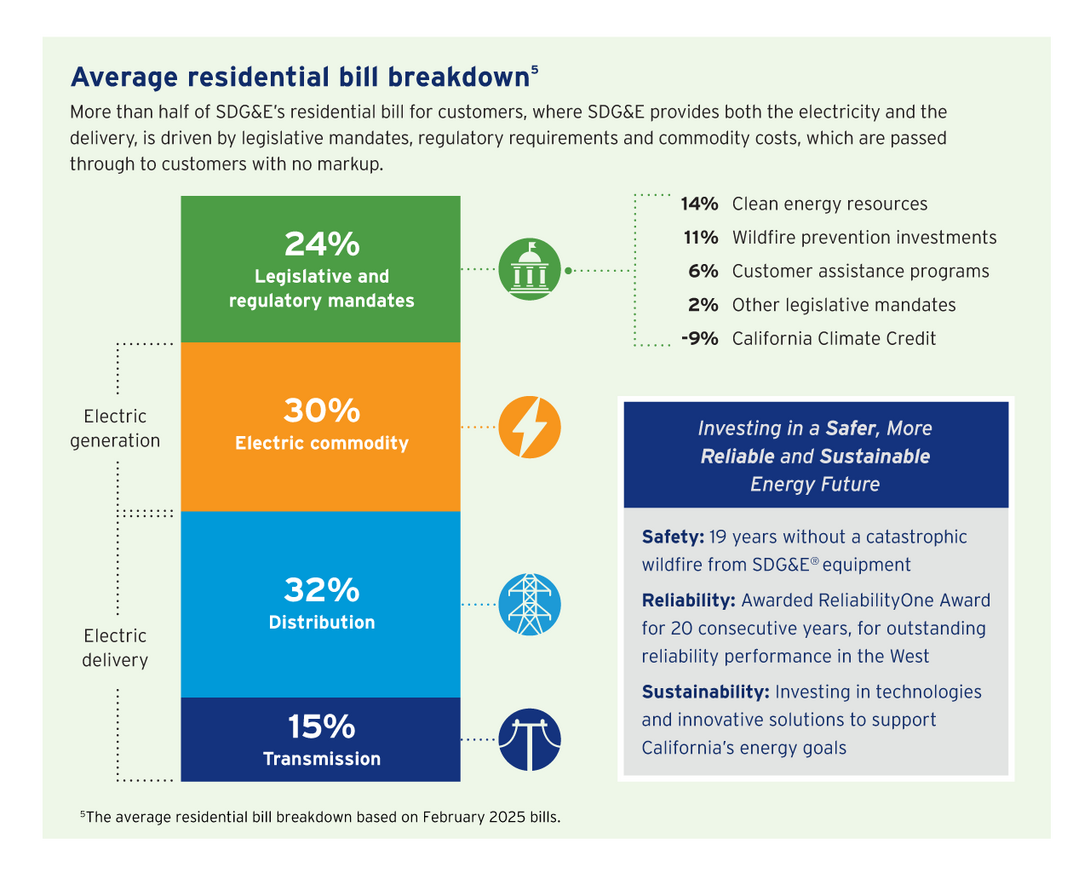
As a customer who receives both electric commodity and electric delivery services from SDG&E (non-CCA customers), January’s increase is mainly from the commodity portion of the bill, the electricity you use - not from the delivery portion. The commodity portion of the bill includes the price of purchasing electricity for customers, which is a passthrough cost without markup. The delivery portion of the bill actually went down, however, it is offset by the commodity portion.
We're Here to Help
We know affordability matters and we're committed to helping you manage your energy costs. We have many programs, resources and tips to help you manage energy use and bills. For savings tips and resources, please visit sdge.com/SimpleSteps. If you’re facing challenges with living expenses, you can find discount programs and payment arrangements at sdge.com/assistance.
FAQ
Why are Bills Changing in January?
At the beginning of each year, energy bills are typically updated to reflect new state‑authorized rates for the coming year. Several factors are shaping this year’s changes. First, electricity sales across the region have been lower than expected, which means the fixed costs of maintaining and operating the electric grid are spread across fewer kilowatt‑hours. Second, updated authorized costs are now reflected in rates to support the safe, reliable and clean energy system our region depends on.
The portion of the bill seeing the largest increase between December and January is the commodity portion. This includes the price of purchasing electricity for customers, which is a passthrough cost without markup.
Why is my Bill Anticipated to be Higher Than What I Heard in the News?
As a customer who receives both electric commodity and electric delivery services from SDG&E (non-CCA customers), this increase reflects the total impact for a typical customer bill, not just the delivery portion. This total change includes the cost to deliver safe, reliable energy as well as the cost of the electricity you use. Most of the January increase is from the commodity portion of the bill, including the cost of electricity, which SDG&E passes through at cost, with no markup.
What’s the Difference Between Electric Delivery and Generation?
Delivery covers the grid infrastructure needed to bring electricity to your home. Generation (commodity) is the cost of the electricity itself.
Who Provides Delivery and Electricity Services?
Customers in our region receive their electricity either from a Community Choice Aggregator (CCA), a Direct Access provider or directly from SDG&E. No matter who supplies the electricity, all SDG&E customers receive electricity through SDG&E’s delivery system, which includes poles, wires and substations that are maintained and operated by SDG&E. Learn more about CCAs here.
Is SDG&E Profiting from an Increase in the Commodity?
No. SDG&E does not earn a profit on electricity or natural gas commodity costs purchased on behalf of our customers.
What is SDG&E Doing to Lower Bills?
While working to manage our operating costs and find internal efficiencies, we are also working with lawmakers and regulators to explore policy changes that could help lower bills. Our focus remains on finding solutions while staying committed to providing safe, reliable energy and outstanding customer service. In addition, we have requested approval to discontinue non–cost‑effective programs, which would save customers an estimated $300 million between 2026 and 2031.